
The Åland example
A little-known, neutralized-demilitarized zone in Europe, with special tax status, once occupied by Russia for over a century

Have you ever heard of Åland? Until a few days ago, I hadn’t.
For anyone who remembers the comedy film Mr. Deeds (with Adam Sandler) – a young undercover female reporter claims to be from a (fantastical) town called “Winchestertonfieldville”, Iowa. Mr. Deeds, who’s come to inherit an enormous fortune, and takes a liking to her, tracks down the town and flys her privately to it. She’s astounded when she finds out her made-up town is (in the movie) real:
In turn, President Trump’s negotiating team, in trying to find a territorial compromise for Ukraine-held Donetsk today, seems to be going for: a demilitarized area, that’s in centuries-old contested territory, that Russia lays claim to, will have special economic freedoms, and can endure indefinitely in such a way. Reuters:
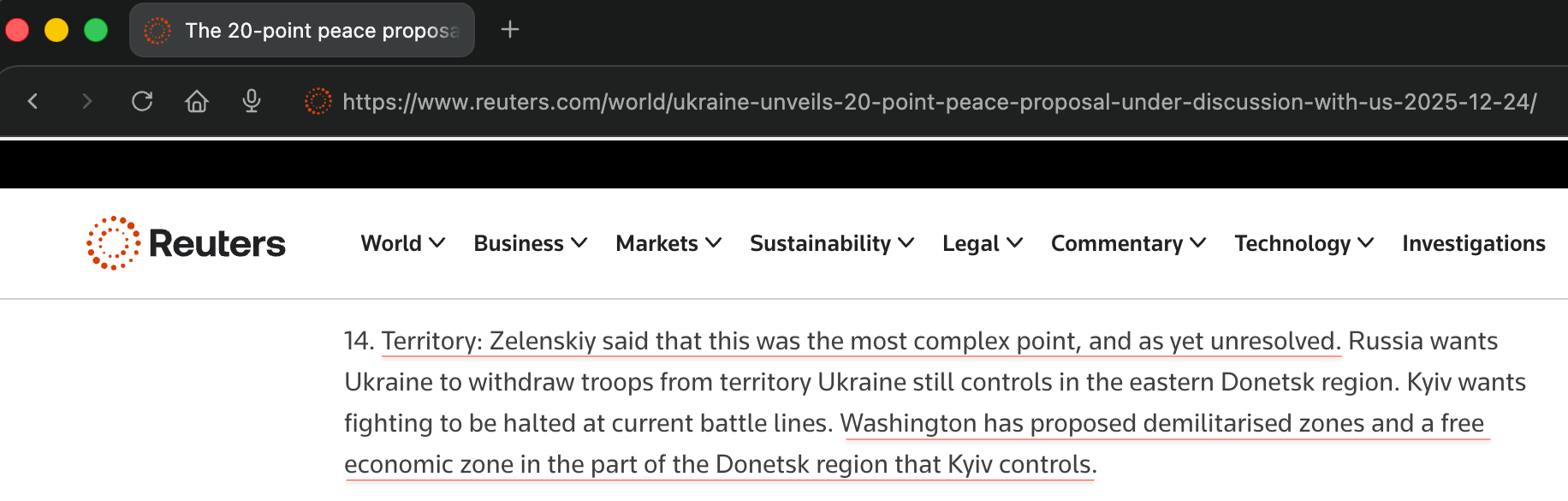
Washington has proposed demilitarized zones and a free economic zone in the part of the Donetsk region that Kyiv controls.
Sounds preposterous? There’s no way an example of such a place actually exists, right?
But it does!
With the below, I feel like Mr. Deeds, having found the geopolitical equivalent of Winchestertonfieldville…
A little-known, successful, neutralized-demilitarized zone in Europe, with special tax status, once occupied by Russia for over a century
Background:
- Åland is not a country; it is a self-governing, demilitarized, Swedish-speaking region of Finland. It’s considered a unique example of self-governance – in a very strategic location, that was rife with conflict and changed hands multiple times over centuries.
- In 1919, coming out of WWI, both Sweden and Finland officially claimed Åland. Finland said the islands were historically and geographically linked to it. Sweden pointed to the islanders’ wish to join Sweden. Sweden proposed a binding referendum on Åland’s future, but Finland refused, treating the issue as an internal Finnish matter.
- The islands had been held by the Russian Empire for over a century until 1917. The League of Nations stepped in to negotiate a creative, autonomous middle-ground in 1921 – the outcome of which has endured ever since.
- Its nickname today: the “Islands of Peace”.
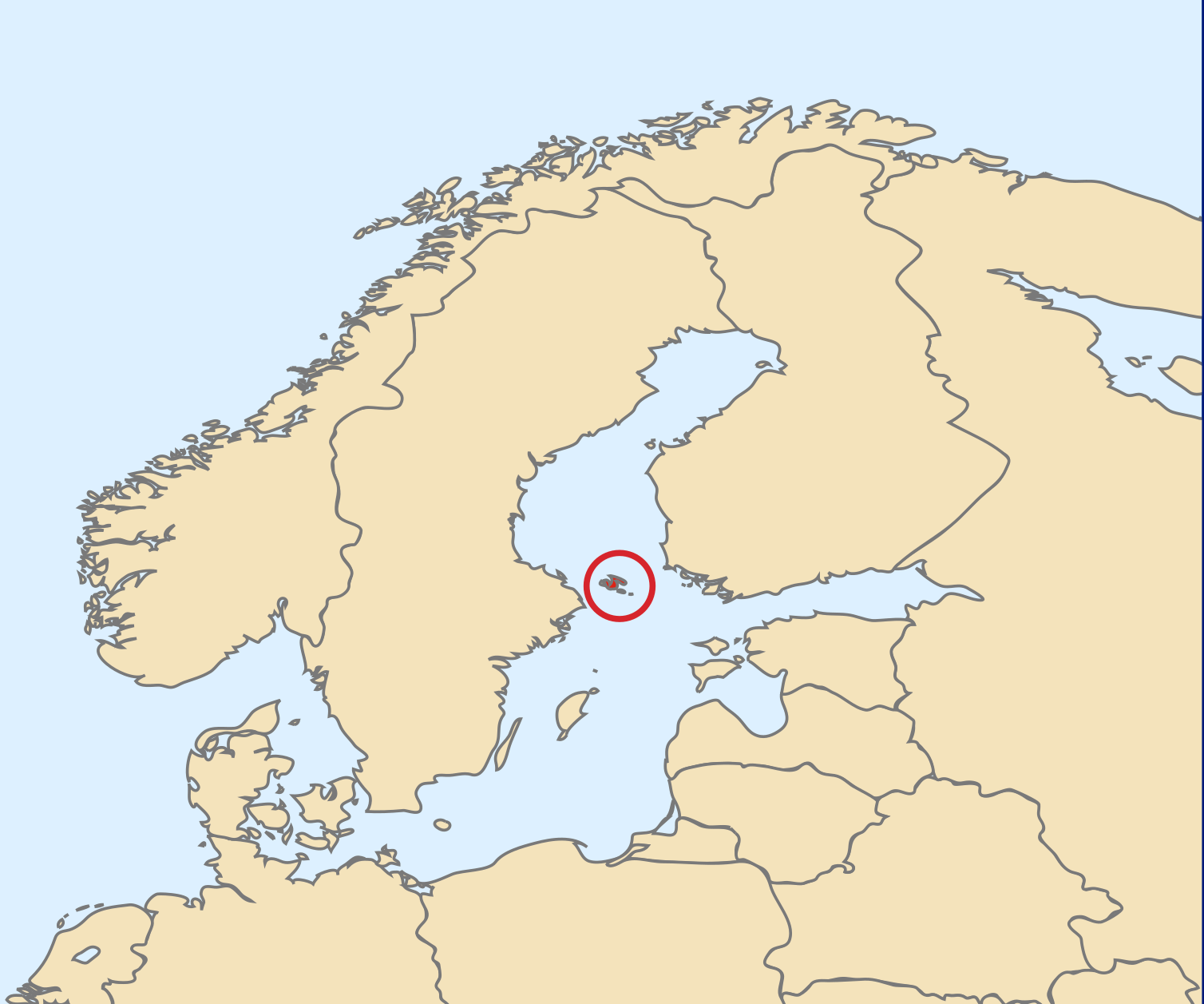
- Åland enjoys unique status, including its own stamps, police, postal service, license plate, call sign prefixes, internet domain code, and EU opt-outs, making it function as if a mini-nation within Finland.
- Finland legally cannot hold military exercises on the islands. And Finnish military aircraft may not land there.
- Åland’s residents with right of domicile are exempt from conscription into the Finnish Defence Forces.
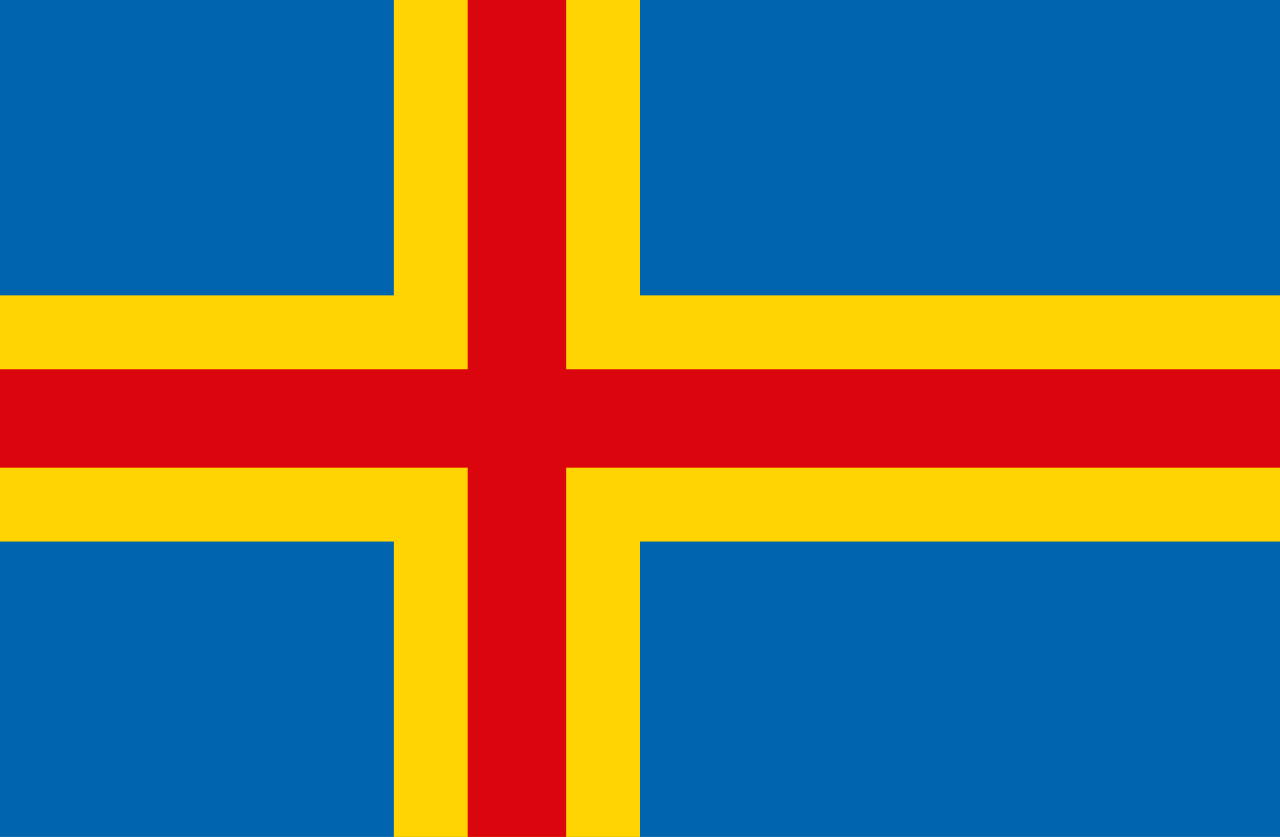
- There is an Ålandic flag:
- Its special autonomous, demilitarized status has been guaranteed internationally and reaffirmed since 1921.
- After the Soviet 1939-40 “Winter War” with Finland (in which Stalin took a very big bite out of Finland) the Soviet Union signed a further bilateral treaty with Finland, often called the “Moscow agreement on Åland”, reaffirming Åland’s demilitarization. The Soviets required the right to maintain a consulate on the islands to monitor demilitarized compliance. The treaty was reinstated in 1948 after World War II, and the consulate, now operated by Russia, remains in Mariehamn, Åland’s capital, today.
- Åland has its own parliament and government, operating with autonomous powers over local laws, education, health care, and culture – though it is ultimately part of the Republic of Finland. The President of Finland may annul an Åland law if it exceeds Åland’s competences, or conflicts with Finland’s national security or international obligations. (Between 1922 and 1951, close to a fifth of Ålandic laws were overturned.)
- Its residents are Finnish citizens, but Swedish-speaking. Swedish is spoken as the first language by 85% of the population. Fewer than 5% speak Finnish as their first language, and communications between the Finnish government and Åland must be conducted in Swedish.
- Åland has special EU rules: it is part of the EU customs union, but isn’t part of the EU’s VAT area (enabling duty-free sales to visitors – even though tax exemption between EU Member States ended as of July 1, 1999). Most of the EU’s normal sales-tax and duty rules do not apply on the islands.
- Åland enjoys a thriving economy: Eurostat data for the mid‑2000s ranked Åland as the 20th wealthiest of the EU’s 268 regions, and the wealthiest in Finland, with GDP per person 47% above the EU average.
- Ålanders were not involved in the negotiations for their autonomy, and were initially opposed to it (representing a lesser degree of recognition than they wanted). However, subsequent changes to the system of autonomy have involved their full participation, and Ålanders now have a strong sense of ownership over their autonomy. Today, polling suggests over 70% wish to remain autonomous, and perception of the political situation has evolved from being “a Swedish province under Finnish possession” in 1921 to “an autonomous part of Finland”.
- Since Finland joined NATO in 2023, Åland is now technically part of NATO territory. It falls under Article 5 coverage – even while being a demilitarized zone close to Russia.
- Right of domicile is required to vote in Åland’s parliamentary elections, to stand as a candidate, and to own or occupy land and real estate in Åland (special permits are sometimes granted for non-residents).
- Åland has a population of roughly 30,000. (Ukraine-held Donetsk Oblast today is estimated ~250,000.) Åland makes up roughly 0.5% of Finland’s land area. (Ukraine-held Donetsk is roughly 1.5% of all of Ukraine remaining under Ukrainian control.)
- Åland’s National Day: 9 June, “Autonomy Day”.
Anyone wishing to dismiss Åland by saying, “Finland and Sweden are friendly neighbors, they can get away with this” is looking at it the wrong way. Demilitarization was first negotiated in 1856, and reaffirmed in 1921 – not exactly coming out of a peaceful decade in Europe. Åland’s demilitarized autonomy went on to endure World War II and the Cold War – on territory Russia had ruled for over a century.
A simple history:
The islands were Swedish for roughly six centuries, until 1809.
Then ceded to Russia, along with all of Finland. The Åland islands became the westernmost outpost of the Russian Empire. Napoleon is said to have put it: a “loaded pistol directed at Sweden’s heart”. (As a Russian-militarized Donetsk would be to Kyiv’s.)
The islands were demilitarized in 1856 after the Crimean War – agreed between Russia, Britain, and France (the “Convention on the Demilitarisation of the Åland Islands”).
In 1917, Finland gained independence from the Russian Empire. Åland petitioned for reunification with Sweden, and organized a referendum in which 95% of voters supported joining Sweden.
Finland refused Sweden’s referendum proposal, and in 1921 the League of Nations negotiated and settled the Sweden-Finland dispute, granting Finland sovereignty so long as Finland would guarantee the islands their Swedish culture, language, local customs, property rights, and self-governance. A separate agreement kept the islands demilitarized.
The Åland Convention of 1921, signed by Sweden, Finland, and eight further European countries (Germany, Denmark, Estonia, France, Britain, Italy, Poland, Latvia) was one of the League of Nations’ first major European agreements – and is perhaps the best surviving success of the League.
Finland’s 2022 National Defense document (page 18):
“Finland is obliged to take necessary measures to ensure the neutrality of the Åland Islands. The Defence Forces are prepared to defend Åland. As a civilian authority, the Border Guard has continuous presence in Åland and is prepared for different contingencies. The Border Guard is able to increase its presence in the area quickly, if necessary.”
A successful and enduring example of demilitarization in a vulnerable area:
“‘Russia perceives Åland as a militarily weaker territorial reserve than the rest of Finland, against which it would be effective to carry out an offensive operation’, Kastehelmi [a Finnish military historian] speculates … [But] ‘I think our security situation is good also because we have a demilitarised Åland, which is the strength of the republic’, President Stubb said in an interview with Ålandsradio & TV [in 2023].”
“Åland is unique as an autonomous, demilitarised, Swedish-speaking region of the Republic of Finland. The history and status of Åland are a prime example of how multilateral cooperation can produce successful and lasting solutions.” - President Stubb, August 2025
Treaty timeline:
- The “Convention on the Demilitarization of the Åland Islands” (1856) is short, consisting of only two articles which state that “the Åland Islands shall not be fortified, and that no military or naval establishments shall be maintained or created there”.
- The “Convention Respecting the Non-fortification and Neutralization of the Åland Islands” was signed in October 1921 among ten European states: Finland, Sweden, Germany, Denmark, Estonia, France, Britain, Italy, Poland, Latvia.
- In this treaty, Finland undertook to maintain the conditions demanded by the 1856 Demilitarization treaty, but also to uphold a regime designed to keep the islands outside of the theatre of war.
- In 1940 a bilateral treaty between the Soviet Union and Finland reaffirmed the non-fortification and demilitarized status of the islands’ territory, and allowed for the Soviet Union to establish and maintain a consulate in Mariehamn, Åland’s capital, to supervise adherence.
- Article 5, Part II of the 1947 Paris Peace Treaty notes that “The Åland Islands shall remain demilitarised in accordance with the situation as at present existing.”
- There is an Åland Peace Institute that seeks to teach by its example: https://peace.ax/en/the-aland-example/
I’ve downloaded two old books to read more on exactly how the agreements were negotiated in 1856 and 1921 – and I will publish more if findings prove to be worthwhile.
In the meantime, I’m curious to know: with talk of “a demilitarized zone” swirling, how many subscribers had heard of Åland and knew of its unique status?
Personally, I had never even heard of the place let alone its unique status.
Hi, can you share these two books? - "I’ve downloaded two old books to read more on exactly how the agreements were negotiated in 1856 and 1921"